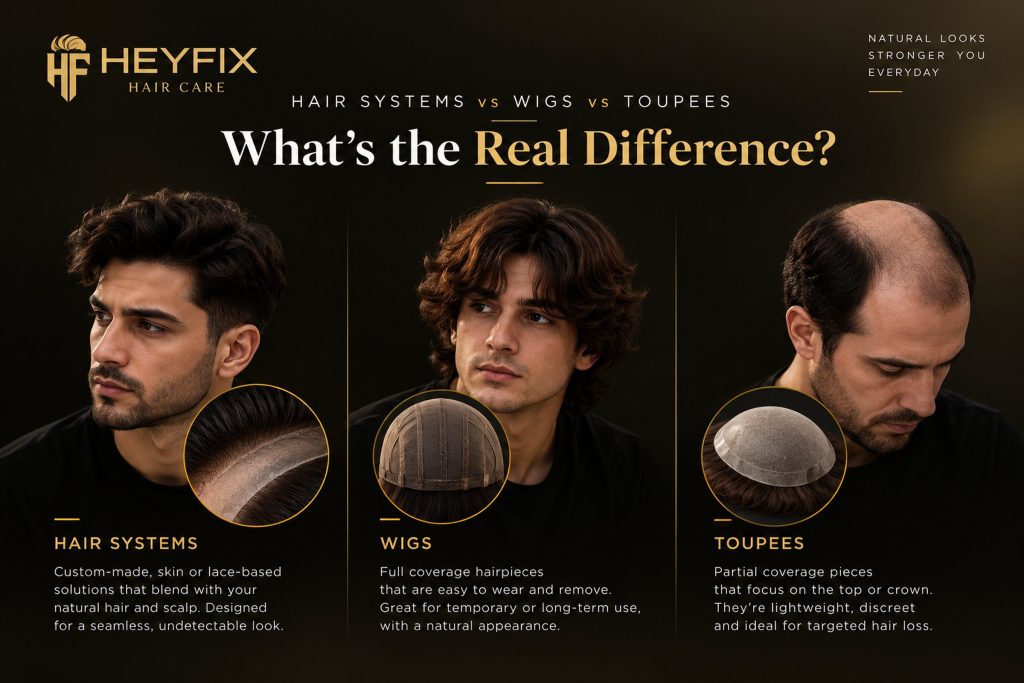
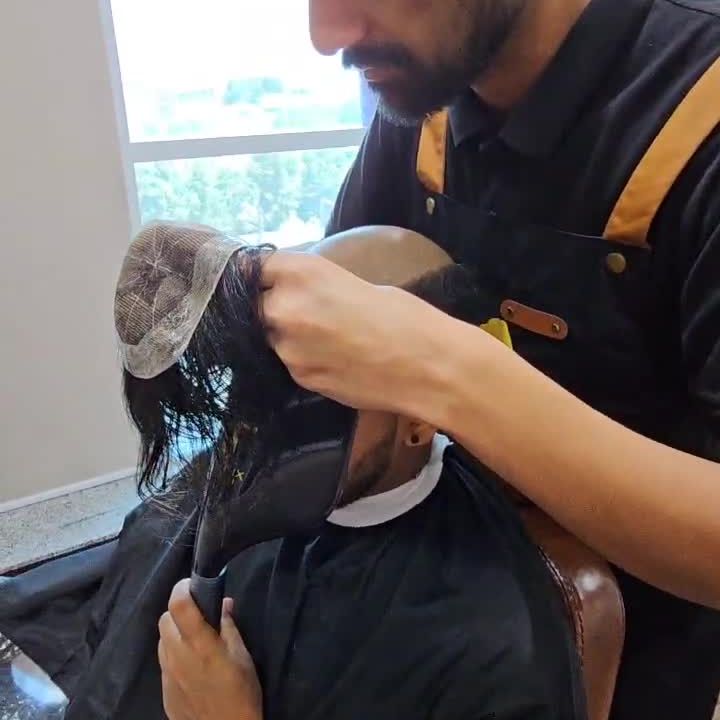
How Much Does Non-Surgical Hair Replacement Cost in Dubai? If you’re searching for the non surgical hair replacement cost in Dubai, the short answer is that most systems in the city range from around AED 700 for ready-made units to AED 8,000 or more for fully bespoke, human-hair systems, with monthly maintenance typically adding AED 80 to AED 300. The base material, hair type, and how much customization your hairline needs mainly decide the final price. This guide walks through real pricing, what drives the cost up or down, how installation works, and how non-surgical replacement compares to a transplant over time, so you can budget with confidence before you book a consultation. What Is Non-Surgical Hair Replacement? Non-surgical hair replacement restores visible hair density using a custom-made hair system that a technician bonds or clips onto the scalp, without any cutting, stitching, or anesthesia. It’s one of the fastest ways to get a full head of hair back, since you see results the same day rather than months later. A man with early crown thinning who isn’t ready for surgery, for example, can walk into a studio in the morning and leave with a full hairline by afternoon. ✦ One thing competitors rarely mention: non-surgical replacement doesn’t stimulate your own hair to grow. It covers the area; it doesn’t treat the underlying cause of loss. Hair Systems vs Hair Patches vs Toupees Dubai marketing uses these three terms interchangeably, but they aren’t quite the same thing. Toupee: an older, more generic term for a small hairpiece covering the crown or top of the head. Hair patch: the common Middle East and South Asian term for a custom or semi-custom system, usually referring to the same product as a “hair system.” Hair system: the modern, more precise term clinics use, referring to a base (mono, lace, PU, or hybrid) with hair ventilated into it by hand. All three achieve the same goal. The difference comes down to branding and how customized the base and hair are to your head. Does the terminology affect the price? Not directly. The base material and hair type set the price, not whether a clinic calls it a patch, system, or toupee. What Non-Surgical Does and Doesn’t Include Non-surgical hair replacement covers visible scalp with a hair system. It does not include medical treatments like PRP (platelet-rich plasma), GFC (growth factor concentrate), or minoxidil, even though clinics sometimes bundle these together under the same “non-surgical” umbrella. According to the American Academy of Dermatology, effective treatment for hair loss starts with finding the underlying cause, ideally with the help of a board-certified dermatologist, since different causes respond to different approaches. A hair system addresses appearance; it doesn’t address why the hair loss is happening. If your goal is purely cosmetic and immediate, a system is the right category. If you also want to slow further loss, that calls for a separate medical conversation, not something the hair system itself handles. How Much Does Non-Surgical Hair Replacement Cost in Dubai? Non-surgical hair replacement in Dubai typically costs between AED 700 and AED 8,000 for the initial system, depending on whether you choose a ready-made unit or a fully bespoke design, with ongoing maintenance usually running AED 80 to AED 300 per visit. Ready-to-wear systems sit at the lower end of that range, with options starting from around AED 699 at some Dubai studios, while fully bespoke, custom-matched systems built around your exact hairline, density, and hair direction start higher, from around AED 2,000 upward. ✦ A detail competitors leave out: the “starting from” price you see advertised almost always refers to a ready-made or semi-custom unit, not the bespoke, fully personalized system most first-time clients actually choose after consultation. In my own consultations, roughly seven out of ten first-time clients upgrade from the advertised entry price once they see how a bespoke hairline compares. Typical Price Ranges by System Type Here’s a general breakdown of what to expect across the Dubai market in 2026. Treat these as planning ranges, since your final quote depends on your specific hair loss pattern. System Type Typical Starting Price (AED) Best For Ready-to-wear unit 700 to 1,500 Quick fix, tighter budget Semi-custom system 1,500 to 3,500 Balanced fit and cost Fully bespoke, human hair system 3,500 to 8,000+ Undetectable, long-term wear Monthly maintenance visit 80 to 300 Ongoing upkeep for any system Example scenario: a client with moderate crown thinning who wants an undetectable, swim-safe result typically lands in the bespoke human hair category, with an upfront cost around AED 4,000 to AED 6,000 plus monthly servicing. What’s Included vs What Costs Extra Most quoted prices cover the base system and initial fitting. What often costs extra: The first professional cut and blend to match your natural hairline Colour matching if your hair has grey or unusual tones Replacement adhesives or tapes for home use between visits Express or rush production for same-week delivery What is usually not included in a “starting from” price? Studios almost always bill styling extras, express turnaround, and monthly maintenance packages separately from the base system price. Want to know exactly where you’d land on this range before you commit to anything? Heyfix Hair Care offers a free consultation where we map your system type and total cost in writing, no guesswork involved. Book Now What Factors Affect Hair System Cost and Price in Dubai Base material, hair type, and customization level mainly drive hair system cost and price in Dubai, not the clinic’s marketing or location. Base Material: Mono, Lace, Hybrid, PU & Skin Mono base: a fine mesh material, durable and breathable, mid-range price. Lace base: the most natural-looking at the hairline, but more delicate, sits at the higher end. PU (skin) base: a thin polyurethane layer that mimics scalp skin, very natural, moderate to high durability. Hybrid base: combines lace and PU, balancing realism with strength, typically priced between the two. Each base type also affects lifespan. Mono and lace-hybrid bases tend