
What Is a Hair Patch? A Beginner's Guide to Non-Surgical Hair Replacement
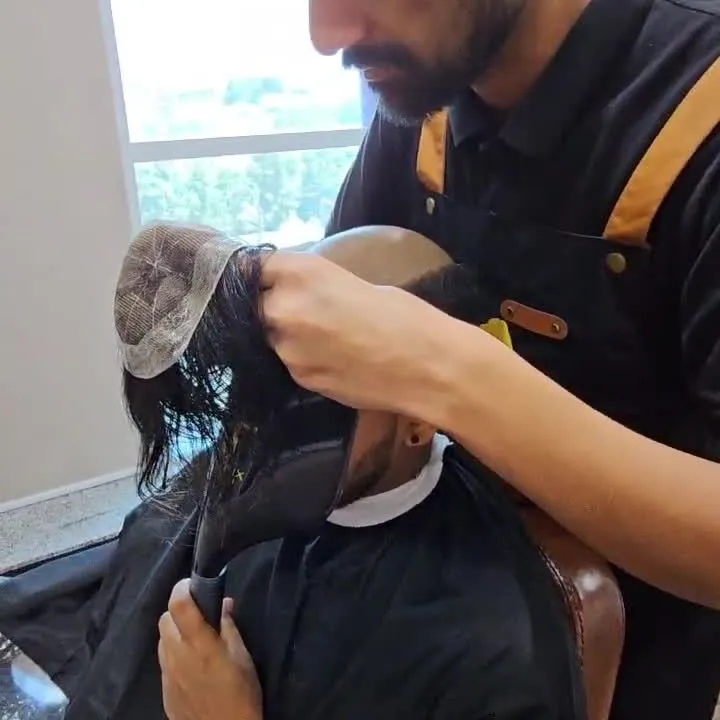
What Is a Hair Patch? (Definition for Beginners)
A hair patch is a small, custom-made hair unit that covers a specific bald or thinning area. It attaches to the scalp without surgery using medical-grade adhesive or clips, blends with your natural hair, and provides instant, reversible results in a single studio visit.
A hair patch is a custom-fitted, non-surgical hair unit that covers a specific bald spot or thinning area and blends with your existing hair. It attaches to the scalp with medical-grade adhesive, tape, or small clips. There is no surgery, no recovery period, and no waiting for results.
In Dubai, reputable hair replacement studios typically operate under Dubai Health Authority guidelines, which include assessing scalp health before any adhesive application to rule out active infections or conditions that could cause irritation.
A client with crown thinning visits a studio in Oud Metha, receives a patch matched to his natural hair color and texture, and walks out with full density the same afternoon.
The most common mistake beginners make is using the wrong search term. If you look for “hair system” you may find full-scalp solutions. If you look for “toupee” you may find outdated products. If you look for “wig” you will find full-coverage caps. A patch is different from all three, and understanding that distinction saves you from buying the wrong product entirely.
Is a hair patch the same as a wig?
No. A wig covers the full scalp and is designed for daily removal. A patch bonds to a specific area and is meant for semi-permanent wear.
Do I need to shave my head?
No. A patch integrates with your existing hair, so surrounding hair actually helps with blending and anchoring.
The 3 Parts of Every Hair Patch
Every patch has three components that work together as a system. The base is the thin membrane that sits against your scalp, made from lace, polyurethane, or monofilament. The hair is either human or synthetic, knotted into the base by hand or machine. The attachment is what keeps it in place: medical-grade tape, liquid adhesive, or small pressure clips.
Human hair patches often use either standard processed hair or Remy hair, where the cuticle layer runs in one direction to reduce tangling.
The base determines how breathable and secure the patch feels. The hair determines whether you can style it with heat or color it. The attachment determines whether you can swim, gym, or remove it daily. You cannot choose one without considering the others, yet most competitors list these parts in isolation without explaining how they interact.
Hair Patch vs Hair System vs Toupee vs Wig
These four terms are used interchangeably online, but they describe different coverage levels, attachment methods, and use cases. Understanding the distinction saves you from buying the wrong product.
Google’s own AI Overview conflates these terms, which is why searchers often land on pages that describe wigs when they need patches.
Coverage Area and Purpose
A hair patch covers one specific area: the crown, hairline, or a bald spot. A hair system can mean a patch or a full scalp unit. A toupee traditionally covers only the top of the head. A wig covers the entire scalp.
In Dubai’s multicultural market, “hair patch” is the search term South Asian and Arab clients use most often, while Western expats tend to search “hair system.” Using both terms in your research helps you find the right provider.
Attachment and Wear Differences
Patches and systems bond to the scalp for weeks at a time. Toupees usually use tape or adhesive around the perimeter. Wigs sit on the head and are removed nightly. This changes how natural each looks during daily life.
Which Search Term Should You Use?
If you have partial thinning, search “hair patch” or “bald spot cover.” If you need full coverage, search “hair system” or “men’s hair unit.” If you want daily removal, search “wig.” Using the wrong term leads you to the wrong product category.
Which term do professionals use?
Technicians usually say “hair system” or “hair unit.” Clients in Dubai more often say “hair patch” or “hair fixing.”
Can one studio offer all of them?
Yes, but a men-only specialist studio focuses on patches and systems rather than wigs.
How a Hair Patch Works in 2 Hours
The entire non-surgical hair replacement process from consultation to finished style takes approximately two hours at a specialist studio. This is possible because the patch is pre-constructed to common specifications and then customized during your visit, rather than ordered from a factory overseas.
Reputable Dubai studios typically conduct a scalp health assessment before any adhesive application, in line with local health and safety standards.
Step 1: Scalp and Hair Matching
The technician assesses your scalp, thinning area, hair color, texture, and density to determine the right patch size and base type. Color matching is checked in studio and natural light to ensure a seamless, natural look.
Step 2: Custom Base Fitting
A template of your scalp shape is created so the patch follows your exact contour. The technician selects the base material: lace for breathability, polyurethane for security, or monofilament for durability.
Step 3: Attachment to the Scalp
The patch is positioned and secured using medical-grade adhesive or tape formulated for extended skin contact. The bond cures within minutes.
Step 4: Cutting and Blending
The technician cuts and layers the patch hair to match your existing length and style. Transitional density is added at the edges so the patch does not look like a cap sitting on top.
Why This Takes Just 2 Hours
Unlike custom orders that take one to two weeks for fabrication, specialist studios stock pre-sized bases and hair matched to common demographics in Dubai. The customization happens during fitting, not before. This is the core difference from competitors who ship templates overseas for construction.
Does the process hurt?
No. There are no needles, incisions, or anesthesia. You may feel slight pressure or coolness during adhesive application.
Can I go back to work the same day?
Yes. There is no recovery period, though you should avoid heavy sweating for the first 24 hours.
Types of Hair Patches for Beginners
Choosing a patch means choosing a base material and a hair type. These two decisions determine how natural the patch looks, how long it lasts, and how it performs in Dubai’s climate.
Lace Base Hair Patches
Fine mesh with hand-knotted hair. This is the most breathable option, which makes it popular in Dubai heat. The hairline looks natural because the mesh disappears against skin. Typical lifespan: eight to twelve months.
A marketing executive who walks between meetings in Downtown Dubai chooses lace because sweat evaporates through the mesh instead of pooling underneath.
Polyurethane (Skin) Base Patches
Thin, transparent plastic membrane that bonds flush to the scalp. This is the most secure option for gym and swimming. It is less breathable than lace. Typical lifespan: six to ten months. The transparent edge creates an invisible hairline.
Monofilament Base Patches
Soft mesh where each hair is individually tied. This offers a good balance of durability and natural movement. Popular for clients who want longevity over ultra-invisible edges. Typical lifespan: eight to fourteen months.
Human Hair vs Synthetic Hair
Human hair can be styled, colored, and heat-treated like your own. It typically lasts six to ten months with proper care. Synthetic hair holds a pre-set style and costs less, but cannot be heat-styled and may develop shine over time.
For a first-time trial, synthetic is not necessarily inferior. It lets you test the look and feel before investing in a premium human hair patch. Many Dubai clients switch to human hair after their first replacement cycle.
Which base is best for Dubai summers?
Lace or monofilament for breathability. If you swim daily, polyurethane is worth the trade-off.
Can I color my patch hair?
Only if it is human hair. Synthetic hair will melt under salon color processing.
Not sure which base or hair type fits you?
Book a free consultation at HeyFix Hair Care Centre. Our technicians match the right base, hair type, and attachment method to your scalp, skin, and daily routine before you commit to anything.
Who Should Get a Hair Patch?
Hair patches work best for men with partial hair loss who want immediate results without surgery. They are not for everyone. Knowing the difference saves time and money.
Signs a Hair Patch Could Help You
- Crown thinning or a receding hairline with good density at the back
- Patchy hair loss from alopecia areata
- Hair loss from stress, medication, or post-chemotherapy regrowth periods
- A milestone event where you need fast results
- You have already tried topical treatments or supplements without success
Industry data widely cited in the UAE market suggests that a significant portion of men in the region experience some degree of hair loss, with onset often occurring before age thirty.
The biggest untapped segment in Dubai is early-stage hair loss. Men at Norwood stage two to three often think they are “not bald enough” for a patch, but this is exactly when blending is easiest and most natural.
When a Hair Patch Is Not the Fit
- Total scalp hair loss (alopecia totalis), where a full cranial prosthesis is needed instead
- Active scalp infection, open wounds, or severe psoriasis
- Unrealistic density expectations. A patch adds coverage, not unlimited volume
- You are unwilling to attend maintenance every three to four weeks
Can I get a patch if I still have most of my hair?
Yes. Early-stage loss is actually ideal because surrounding hair makes blending seamless.
Is there an age limit?
No. The decision depends on hair loss pattern and scalp health, not age.
Common Hair Patch Myths in 2026
Misinformation keeps men from exploring patches. Here are the three myths that surface most often in consultations.
Will a Hair Patch Look Fake?
A properly fitted patch is undetectable from conversational distance. The “fake” look comes from three fixable errors: wrong density for your age, poor color matching, and a straight-line hairline that ignores your natural shape.
Modern lace fronts and thin skin bases use membranes that are virtually invisible at the hairline when fitted correctly.
A client receives a patch with a slight widow’s peak and transitional density at the temples. These small details make the difference between “nice haircut” and “is that a wig?”
The “will it look fake” fear is the number one documented buyer objection. The answer is not reassurance alone. It is showing the client their own scalp template and explaining exactly how the hairline will be designed before any attachment happens.
Old Toupees vs Modern Patches
The thick, shiny toupees of past decades used synthetic hair on heavy rubber bases. Modern patches use medical-grade materials, hand-ventilated hair, and precise color matching. They are not the same product category.
Do Patches Damage Existing Hair?
No, when fitted by a trained technician using proper adhesives. Damage occurs only from DIY application with non-medical glues, poor removal technique, or wearing a patch beyond its service life.
Medical-grade adhesives used by reputable studios are formulated to release gently without pulling existing follicles[1].
Can people tell I am wearing one?
Not if it is fitted and colored correctly. The most common giveaway is talking about it nervously.
Will the adhesive make my hair fall out?
No. Proper adhesives are designed for scalp contact and should not damage follicles when applied and removed professionally.
Where a Hair Patch Fits Among Options
A hair patch is one point on a spectrum of hair loss solutions. Understanding where it sits helps you decide whether to start here or combine it with other treatments.
Hair Patch vs Minoxidil and PRP
Minoxidil and PRP are medical treatments that may slow loss or stimulate regrowth. They typically take three to six months to show visible change. A patch provides coverage today while those treatments work in the background.
You do not have to choose between medical treatment and a patch. Many Dubai specialists recommend combining them. The patch handles aesthetics immediately, while medical treatments address the biological cause over time.
Hair Patch vs Hair Transplant
A transplant moves your own follicles from donor areas to thinning zones. It is permanent but costs significantly more and requires six to twelve months for visible growth. A patch gives instant results at a lower initial investment and is fully reversible.
For a detailed comparison, read our full guide on hair patch vs hair transplant in Dubai.
A 35-year-old executive chooses a patch because he cannot take extended time off work for transplant recovery and needs results before a quarterly board presentation.
Can I get a transplant later if I start with a patch?
Yes. Many men use a patch while saving for surgery or waiting to see if their loss stabilizes.
Is a patch a permanent solution?
No. It is a semi-permanent cosmetic solution that requires maintenance and periodic replacement.
FAQ: What Beginners Ask About Patches
What is a hair patch, exactly?
A custom-fitted, non-surgical hair unit that covers a specific bald or thinning area. It attaches to the scalp with medical-grade adhesive, tape, or clips and blends with your natural hair for instant, reversible results.
How long do hair patches last?
Lifespan depends on base material, hair type, and lifestyle. Lace bases typically last eight to twelve months. Polyurethane bases last six to ten months. Human hair generally outlasts synthetic. Heavy gym use or Dubai heat may shorten these ranges slightly.
How long do hair patches last?
Lifespan depends on base material, hair type, and lifestyle. Lace bases typically last eight to twelve months. Polyurethane bases last six to ten months. Human hair generally outlasts synthetic. Heavy gym use or Dubai heat may shorten these ranges slightly.
Is a hair patch good for your hair?
Yes, when fitted by a trained technician. Medical-grade adhesives are designed for scalp contact and should not damage follicles. The patch does not interact with hair growth. It simply covers the area while your natural hair continues its cycle underneath.
Can you remove a hair patch daily?
Only if it is attached with clips. Tape and adhesive bonds are designed for semi-permanent wear, typically two to four weeks. Daily removal of bonded patches weakens the adhesive and can stress the base material.
Is a hair patch the same as a transplant?
No. A transplant is surgery that relocates your own follicles. A patch is a cosmetic unit that attaches externally. Transplants are permanent; patches are reversible and adjustable.
Will people notice I'm wearing one?
Not if it is fitted, colored, and styled correctly. Modern base materials are designed to be invisible at the hairline, and transitional blending hides the edge. The most common “tell” is incorrect density: too thick for your age or face shape.
How much does a hair patch cost in Dubai?
Entry-level patches start from AED 800. Custom human hair systems range up to AED 3,000. Monthly maintenance adds a modest per-visit fee. For a full breakdown, see our guide to hair patch cost in Dubai.
Conclusion
A hair patch is not a wig, not a transplant, and not a magic cure. It is a practical, reversible cosmetic tool that gives men immediate, natural-looking coverage for partial hair loss. In 2026, the technology is good enough that the only remaining barrier is the stigma left behind by outdated toupees.
If you want the complete picture, including process, safety standards, cost, and aftercare, read our full guide to non-surgical hair replacement in Dubai.
If you are in Dubai and considering your first patch, start with a consultation at a reputable studio. Ask to see base samples, request a scalp health check, and do not settle for a one-size-fits-all solution. Your hair is individual. Your patch should be too.
Ready to see your new hairline?
Start with a private, no-pressure consultation at HeyFix Hair Care Centre in Oud Metha, Dubai. We’ll assess your scalp, match your hair, and show you exactly how a patch would look — before you decide anything.
Book Your Consultation
Refrences
[1] U.S. Food and Drug Administration. Use of International Standard ISO 10993-1, “Biological evaluation of medical devices – Part 1: Evaluation and testing within a risk management process.” FDA Guidance Document, September 2023. https://www.fda.gov/media/142959/download
[2] Dubai Health Authority. Standards for Non-Surgical Cosmetic Procedures. DHA/HRS/HPSD/ST-05, Issue 2.1, December 2024. https://dha.gov.ae/uploads/032025/Standards%20for%20Non%20Surgical%20Cosmetic-%20Final2025345181.pdf
[3] Krupa Shankar, D.S., Chakravarthi, M., Shilpakar, R. Male Androgenetic Alopecia: Population-Based Study in 1,005 Subjects. International Journal of Trichology / PMC, 2009. https://www.ncbi.nlm.nih.gov/pmc/articles/PMC2938575/