
Hair Patch Care in Dubai's Summer: What Actually Works
Dubai’s summer doesn’t just test your patience. It tests your hair patch. Between 45°C+ heat, indoor-to-outdoor AC swings, and a UV index that stays “extreme” for months, adhesive bonds and hair fiber take a real beating between June and September. This guide covers Hair Patch Summer Care in Dubai the way an experienced stylist would explain it: what actually breaks down first, what holds up, and which popular advice you’ll see online but shouldn’t follow here. Whether you’re new to hair systems or maintaining one through your second Dubai summer, here’s what actually works in 2026.
What Happens to a Hair Patch in Dubai’s Summer Heat
Summer heat affects a hair patch in three separate ways: it softens the adhesive bond, speeds up sweat and oil buildup, and fades hair fiber through UV exposure. Most lifting or slippage complaints between June and September trace back to one of these three, not a “bad” hair system.
Heat, Humidity, and Sweat vs UV Damage
These are two separate damage tracks, and treating them as one is the most common mistake. Heat, humidity, and sweat attack the bond; they don’t fade or dry out the hair itself. UV radiation attacks the fiber’s color and texture instead. Copernicus Climate Change Service data shows Dubai’s UV index regularly reaching 10–11, or “extreme,” from June through August, roughly double the winter average.
✦ A patch can have a rock-solid bond and still look sun-faded by August, or the reverse. They need separate fixes, not one routine.
How Adhesive Reacts to Dubai’s Heat
Heat makes most adhesives softer and tackier, which is why hairlines lift faster in peak summer than in winter. Scalp temperature rises, pores open, and oil mixes with sweat under the base. A system that comfortably holds four weeks in December often needs reattaching every 10–14 days in July, same wear pattern, same person.
The Hidden Risk of AC-to-Outdoor Temperature Swings
Few guides mention this, but it matters in Dubai specifically: moving between 45°C streets and 18–20°C air-conditioned malls, offices, and cars all day causes the base material to repeatedly expand and contract.
✦ That constant micro-flexing loosens edge bonds faster than heat alone, a mechanical stress most wearers never connect to their lifting hairline.
Human Hair vs Synthetic Patches in Extreme Heat
Human hair handles heat better structurally and resists the dull, “cooked” look that lower-grade synthetic fiber can develop after repeated 45°C+ exposure. Modern heat-resistant synthetics narrow this gap but don’t close it. For daily wear through a Dubai summer, human hair is the safer choice; synthetic works fine for occasional or evening wear.
Does a hair patch feel hotter than natural hair in summer?
Slightly. The base traps a small amount of heat against the scalp, though breathable options like Swiss lace noticeably reduce this.
Choosing the Right Base and Adhesive for Dubai’s Climate
The right base and hair system adhesive for Dubai’s heat matter more here than in almost any other climate, because sustained heat and humidity expose weaknesses that milder conditions hide. Getting this right upfront cuts down on emergency touch-ups later in the season.
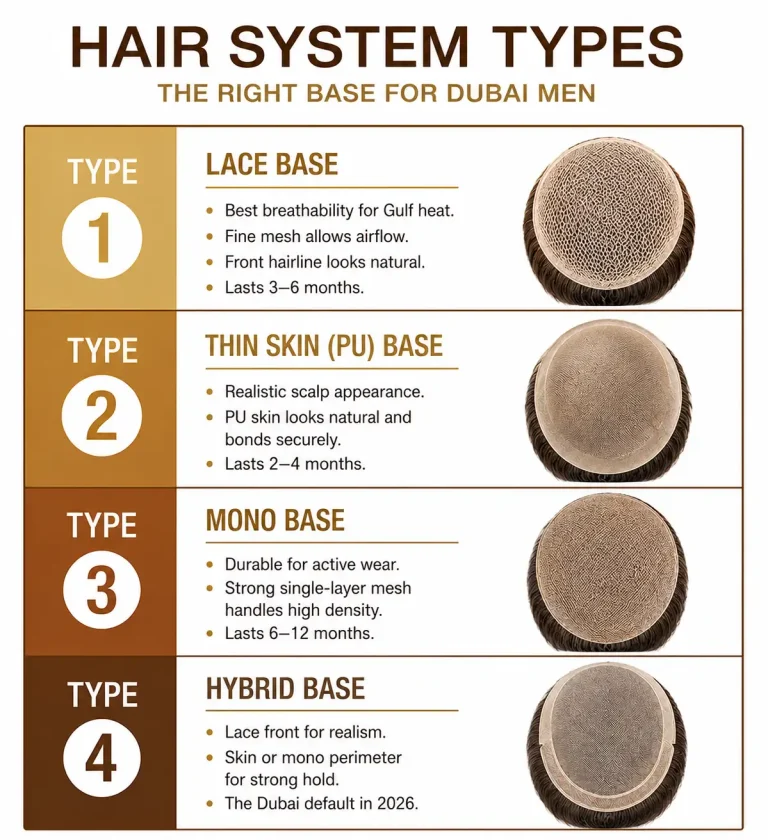
Lace vs Swiss Lace vs Poly Base in High Heat
Lace bases breathe best but wear out fastest under heavy sweat. Swiss lace holds up to more moisture while staying reasonably breathable. Poly bases seal completely and trap heat, which most specialists advise against for daily summer wear. Swiss lace is the most balanced choice for hot, humid climates like the UAE.
Tape vs Glue: Which Holds Up Better in Heat?
Liquid adhesive generally outlasts tape in Dubai’s heat because it bonds the full base rather than just the edges, reducing lift points. Tape is faster to apply and remove, which suits short trips or occasional wear better. Many wearers here combine both: glue for the base, tape reinforcement at the hairline.
Hair System Adhesive Options for UAE Heat and Humidity
Look for adhesives specifically labeled sweat- or humidity-resistant, not standard-hold formulas.
✦ A “4-week” adhesive rated for a temperate climate often performs closer to 10–14 days in Dubai’s summer, so plan maintenance around real-world Gulf performance, not the label’s default claim. A stylist can also match adhesive strength to your sweat level and activity.
Scalp Protectors and Anti-Sweat Barriers
A scalp protector creates a thin barrier between skin and adhesive, reducing oil and sweat interference so the bond lasts longer. This is the core of hair patch sweat management in Dubai: block moisture before it reaches the adhesive, not after. Skipping this step is one of the most common causes of early lifting.
Do I need a stronger adhesive in summer than winter?
Usually, yes. A humidity-rated adhesive that outperforms your winter formula is worth the switch for June through September.
Sun Protection for Hair Patches and Toppers in Dubai
UV damage to a hair patch shows up as fiber fade, dryness, and texture change, not lifting, which is a separate, heat-driven problem. Sun protection for a hair system in the UAE means shielding the fiber itself, not blocking rays from reaching scalp skin under a full base.
UV Sprays vs Leave-In Conditioners
UV protectant sprays are made specifically for wigs and hair systems and add a light barrier that reduces fiber fade; regular hair products aren’t formulated for this. Leave-in conditioners add moisture and shine but don’t block UV rays. Use both: UV spray for protection, leave-in for texture, especially on human hair worn outdoors daily.
Hats, Caps, and Scarves That Work
Loose, breathable hats, wide-brim cotton or linen, protect against sun and heat without trapping sweat against the base. Tight caps or synthetic-lined hats do the opposite: they trap heat and moisture exactly where the adhesive needs to stay dry. A cotton hat worn a size larger than usual works best over a hair patch.
Does a Hair Patch Need Sunscreen or UV Spray?
A hair system needs a UV protectant spray made for hair systems, not standard sunscreen. Sunscreen can leave residue that interferes with the adhesive bond, and it isn’t formulated to protect hair fiber in the first place.
Can I use regular hair sunscreen sprays on a hair patch?
Only if it’s alcohol-free and specifically labeled safe for wigs or hair systems; many general haircare UV sprays aren’t.
Daily Hair Patch Summer Care Routine in Dubai
A summer hair patch maintenance routine in Dubai works best split into four windows: morning, midday, evening, and night, since heat exposure and sweat levels swing dramatically across a single day here.
Morning Routine Before Leaving the House
Check the hairline for overnight lifting, apply UV protectant spray before heading out, and confirm the adhesive has fully cured if the system was reattached the night before. A rushed morning bond is the top cause of midday lifting.
Midday Care During Peak Heat (10 a.m.–4 p.m.)
Blot, don’t rub, sweat from the hairline with a clean cloth during peak UV and heat hours. ✦ Rubbing, not weak adhesive, is the real cause of most midday lifting people blame on “bad glue.” Spend a few minutes in shade or AC after intense outdoor activity to let the scalp cool gradually.
Evening Cleanup After Sweat and Sun
Rinse the system with cool water to clear salt and sun exposure buildup, then follow with a sulfate-free shampoo on wash days. Summer accelerates residue buildup compared to cooler months, so evening rinses matter more now than they do in winter.
Nighttime Storage and Recovery
Let the base fully air-dry before bed or storage. Trapped moisture overnight is a common cause of odor and premature adhesive breakdown. If not worn overnight, store the system on a breathable mannequin head away from direct AC vents, which can dry out human hair fiber.
Should I wash my hair patch more often in summer?
Yes, slightly. Most wearers add one extra wash per week during peak heat to clear sweat and product buildup faster.
Not sure your current routine is enough?
Dubai summers are hard on even a well-fitted hair system. If you’re noticing more lifting, fading, or scalp irritation than usual, [Clinic Name]’s specialists can check your base, adhesive, and fit in person and build a maintenance plan around your actual routine.
Swimming, Beach Days, and Sandstorms: 2026 Best Practices
Swimming, beach days, and sandstorms each stress a hair patch differently: chlorine and salt water weaken adhesive, sand and dust work into the base, and all three add to the maintenance load a Dubai summer already brings.
Waterproof Adhesive for Pool and Sea Days
Standard adhesive isn’t rated for prolonged water contact. For pool or beach days, use a waterproof-specific adhesive and let it fully cure, often 24 hours, before swimming. This matters especially for hair topper Dubai summer wearers, since toppers often use lighter bonds than full systems.
Rinsing and Rebonding After Water Exposure
Rinse with fresh water immediately after swimming to remove chlorine or salt before it dries into the base. Dried chlorine can stiffen and discolor fiber, while dried sea salt speeds up adhesive breakdown. Plan an earlier rebonding cycle during weeks with frequent beach or pool time.
Sandstorms and Dust: Dubai’s Hidden Risk
✦ Sandstorms are a real seasonal risk almost no hair system guide outside the Gulf mentions. Fine dust works into the base and along the hairline edge, creating friction that lifts adhesive from underneath. After any dusty or windy day, a gentle rinse and hairline check prevents small buildup from becoming a bigger lift.
Recommended Maintenance Frequency in Summer vs Winter
Most wearers move from a 3–4 week reattachment cycle in winter to roughly 10–14 days in peak Dubai summer, especially with regular sweating, swimming, or outdoor work. Servicing more often isn’t overkill here, it’s what the climate actually requires.
Is pool water or sea water harder on a hair system?
Both cause buildup, but sea salt tends to dry and stiffen the base faster than chlorine, so beach days usually call for a quicker rinse.
UV Spray vs Hat vs Breathable Base: A Comparison
No single method fully protects a hair patch through a Dubai summer. UV spray, hats, and breathable bases each solve a different part of the problem, and most wearers need at least two of the three together.
What Each Method Protects Against
UV spray protects fiber color and texture from sun fade. A breathable base, like Swiss lace, protects the bond from sweat and heat buildup. A hat or scarf protects against both, but only while it’s actually worn. None of the three protects against sandstorm dust or chlorine, which need the separate steps covered above.
What None of Them Fully Solve
✦ Even combined, these methods don’t remove the need for a shorter maintenance cycle in summer. They extend how long the bond and fiber color hold up, not how long the system can go between services. Treat them as damage reduction, not a substitute for more frequent care.
Which single method matters most if I can only manage one? A breathable base, since it protects the bond, the part most likely to fail first and cause a visible problem.
When Standard Summer Advice Doesn’t Apply
Most summer hair advice online is written for natural hair or general wigs, not systems bonded to skin, and some of it can actively damage a hair patch or irritate the scalp underneath it.
Why Regular Sunscreen Isn’t Safe for Hair Patches
Standard sunscreen contains oils and silicones that can weaken adhesive bonds and leave residue that’s difficult to clean from the base. It’s also not designed to protect hair fiber the way a UV protectant spray is. Keep sunscreen off the scalp area under the system; use it only on exposed skin elsewhere.
Sensitive Scalps and Skin Reactions in Extreme Heat
Heat increases sweat and oil production, which can trigger irritation in wearers who tolerate the same adhesive fine in cooler months. Redness, itching, or small bumps along the hairline are signs to switch to a gentler, hypoallergenic adhesive or add a scalp protector, not to push through it.
When DIY Fixes Aren’t Enough: Call a Specialist
A quick touch-up is fine for a small lifted edge. Recurring lifting within days of reattachment, visible fiber damage, or ongoing scalp irritation are signs the base, adhesive, or fit needs professional reassessment, not another home fix.
Is scalp irritation in summer always caused by the adhesive?
Not always. Heat rash and increased oil production can look similar, so if irritation persists after switching adhesives, a dermatologist visit rules out unrelated skin issues.
Adjusting Your Hair Patch Routine After Summer
Dubai’s cooler months, roughly November through March, call for a noticeably different routine. The same summer-strength adhesive and washing frequency can over-dry the scalp and fiber once heat and sweat drop off.
Transitioning Adhesive and Products for Cooler Months
Ease back toward a standard-hold adhesive and stretch the reattachment cycle back to 3–4 weeks as sweat and heat decrease. Cut back on UV spray frequency and reintroduce richer conditioning products. Cooler air in Dubai is drier, not just less hot.
Hair Topper vs Full System Care in Summer
Toppers cover less scalp and generally breathe better, so they typically need a slightly less aggressive adhesive but still face the same UV fade risk as full systems. Full systems, covering more surface area, trap more heat and need closer sweat monitoring during peak Dubai summer months.
Does a hair topper need less summer maintenance than a full hair system?
Somewhat. Less adhesive surface means fewer lift points, but UV and sweat care still apply equally to both.
FAQs: Hair Patch Summer Care in Dubai
Does Heat Damage Hair Patch Adhesive?
Yes. Heat softens most adhesive formulas and combines with sweat and oil to weaken the bond faster than in cooler months, which is why reattachment cycles shorten in summer.
Can You Wear a Hair Patch While Swimming?
Yes, with a waterproof-rated adhesive that’s fully cured before water contact. Rinse with fresh water immediately after swimming to clear chlorine or salt before it dries into the base.
How Often Should You Reapply UV Protection Spray?
Most UV protectant sprays for hair systems need reapplying every few days during peak Dubai summer, or after swimming, heavy sweating, or a full wash. Check the product label for exact timing.
Is Human Hair or Synthetic Better for Dubai Heat?
Human hair generally performs better for daily summer wear since it resists sun-driven texture changes better than most synthetic fiber. Synthetic works fine for occasional or evening use.
How Often Should a Hair Patch Be Rebonded in Summer?
Roughly every 10–14 days for most wearers in peak summer, compared with 3–4 weeks in winter, sooner for heavy sweating, swimming, or outdoor work.
Can You Wear a Hair Patch in Dubai's Humidity Without It Lifting?
Yes, with the right base (Swiss lace), a humidity-rated adhesive, and a scalp protector. Humidity alone isn’t the main issue; sweat and heat combined with humidity cause most lifting.
Final Thoughts
A hair patch doesn’t need to fight Dubai’s summer, it needs a routine built for it. Wearers who get through June to September without constant lifting or fading aren’t using secret products; they’re matching base, adhesive, and UV protection to what 45°C heat, AC swings, and sandstorms actually do to a hair system. Shorten the maintenance cycle, treat sweat care and sun care as separate problems, and skip advice written for milder climates. Get your hair patch Dubai summer routine right once, and the rest of the season gets a lot easier, for the system and for you.
Ready to get your hair system summer-ready?
Heyfix Hair Care Centre specialists can match your base, adhesive, and aftercare routine to Dubai’s climate, so you’re not guessing your way through another summer.